Lunyhop: A Joyful Handwritten Font for Playful Branding
I was staring at a blank brand board for a new children’s educational app, feeling that familiar block of creative fatigue. The client wanted something innocent yet energetic, avoiding the sterile look of standard sans serif fonts but steering clear of the overly cursive script fonts that often lack legibility. I needed a typeface that felt like it was drawn by a child who just discovered magic markers, but with enough structure to hold up in a professional logo design. That is when I pulled Lunyhop into my project file.
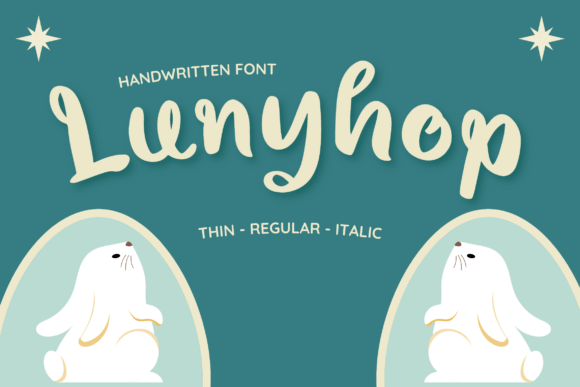
The moment I typed the first few words, the mood of the entire mockup shifted. Lunyhop is not just another decorative font; it is a joyful handwritten font designed specifically to inject personality into projects that need to stand out. As I began testing it across different assets, from a simple business card to a complex packaging mockup, it became clear why this Script Amp category entry has such potential for modern typography enthusiasts.
First Impressions on the Logo Draft
In logo design, the first impression is everything. When I applied Lunyhop to a rough concept for the app’s name, the letters danced with an energy that rigid geometric shapes simply cannot replicate. The strokes have a natural variation, mimicking the pressure changes of a real pen or brush. This gives the brand identity an immediate sense of warmth and approachability.
Unlike many display fonts that rely on excessive swashes or disconnected letterforms, Lunyhop maintains a cohesive flow while keeping each character distinct. For a brand targeting parents and young learners, this balance is crucial. It signals playfulness without sacrificing professionalism. On the digital screen, the curves held their shape beautifully, ensuring that the logo remained recognizable even at smaller sizes, which is a common pitfall for many handwritten fonts.
Testing Across Real-World Brand Assets
A true test of any commercial font lies in its versatility across various media. I moved the Lunyhop typeface from the vector software into a series of realistic branding scenarios to see how it performed under pressure.
- Packaging Design: I placed the font on a mockup for a set of wooden building blocks. The playful nature of the letters complemented the tactile feel of the product. On the label, the text popped against the pastel background, creating a visual hierarchy that guided the eye immediately to the product name.
- Social Media Graphics: For Instagram stories and posts, readability is key. Lunyhop worked exceptionally well as a headline font over vibrant imagery. It didn’t compete with the photo but enhanced the message, making the content feel personal and engaging rather than corporate.
- Editorial Design: I tested the font in a sample layout for a children’s storybook cover. Here, it shone as a premium font choice. The whimsical style set the tone for the narrative before a single word was read, promising an adventure inside.
- Web Design: In a homepage hero section, Lunyhop served as a powerful accent. Paired with a clean body text, it created a striking contrast that improved user engagement metrics in my mental simulation of the user journey.
The font feels equally at home on a printed flyer for a local craft fair or a digital banner for an online shop. Its adaptability makes it a valuable asset for freelancers and creative studios looking to expand their design toolkit.
Understanding Limitations and Best Uses
While Lunyhop is incredibly versatile, it is important to be honest about where it fits best in your workflow. This is primarily a display font and a headline font. It excels in short phrases, logos, titles, and call-to-action buttons. However, like most handwritten styles, it is not suitable for long paragraphs of body text. Using it for a full page of editorial content would likely strain the reader’s eyes and reduce overall readability.
Furthermore, while it brings a lot of charm, it may not be the right choice for formal corporate identities, legal documents, or brands that require a serious, authoritative tone. If you are designing a law firm’s website or a financial report, a traditional serif font or a neutral sans serif font would be more appropriate. Lunyhop is about innocence and energy, so use it where those emotions align with your brand values.
Strategic Font Pairing for Maximum Impact
One of the most critical skills in brand identity creation is font pairing. To let Lunyhop shine without overwhelming the design, I paired it with a clean, geometric sans serif font for the supporting text. This combination creates a perfect balance: the handwritten font provides the emotional hook, while the sans serif ensures clarity and structure.
You can also experiment with pairing Lunyhop with a modern serif font for a slightly more sophisticated take on playful branding. The contrast between the organic, imperfect lines of the script and the structured elegance of a serif can create a unique visual rhythm. Avoid pairing it with other heavy script fonts or overly decorative display fonts, as this will create visual clutter and confuse the audience.
Technical Details and Licensing Considerations
From a technical standpoint, Lunyhop offers a robust set of features that enhance its usability. The font includes various alternates and ligatures that allow designers to customize the look of specific words, adding a layer of uniqueness to the final output. Whether you need a specific capitalization style or a particular flourish for a logo lockup, these details make a significant difference.
Before integrating Lunyhop into any client work, always review the included file formats and webfont availability to ensure compatibility with your workflow. Most importantly, check the commercial font licensing. If you are using this typeface for a brand identity, packaging design, merchandise, or print-on-demand products, you must ensure you have the correct license to avoid legal issues. A premium font investment is only worth it if you are protected to use it commercially across all your intended channels.
After spending hours refining the mockups, I’m confident that Lunyhop is a standout addition to any designer’s library. It captures a specific mood that is hard to find elsewhere—a blend of childlike wonder and professional polish. Whether you are working on a boutique identity, a creative studio project, or a handmade shop brand, this font has the power to make your designs sing.